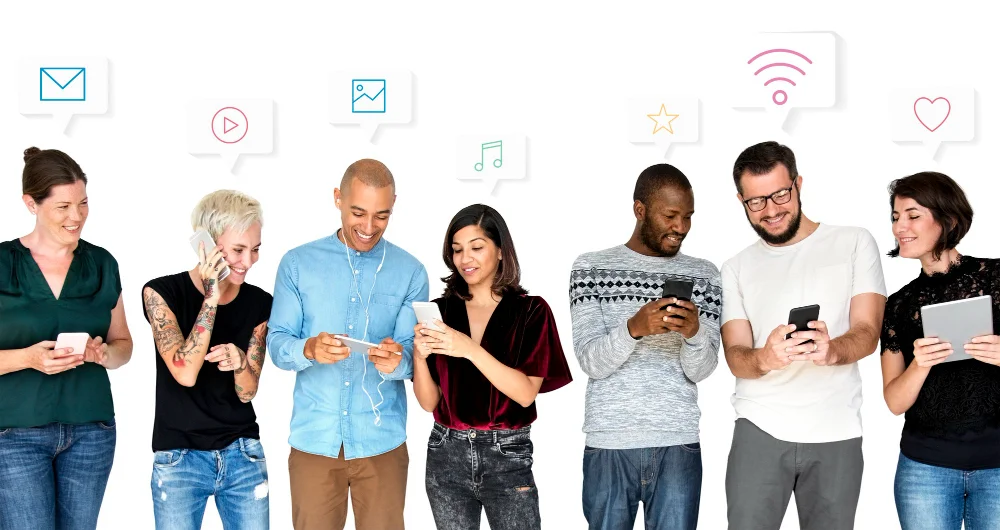
Have you ever noticed how a single emoji can soften the blow of a blunt message—or how an entire business deal can now be closed without a single in‑person meeting? I realised just how dramatically our communication habits had shifted one evening while helping a friend set up a trading account. We were miles apart, yet through voice notes, screen‑sharing apps, and a quick walkthrough on mt4 for MacOS, we navigated what once required a full in‑office tutorial. That moment made me pause and ask myself: When did digital tools become not just aids, but the very backbone of how we express, negotiate, and collaborate?
Modern communication has undergone a quiet revolution. Not the loud, headline‑grabbing type—but a gradual reshaping of how we convey emotion, build trust, and make decisions across screens. And the tools behind this shift—emojis, messaging apps, remote work platforms, AI tools, video conferencing, and even financial platforms—are redefining what it means to “communicate well” in the digital age.
In this article, I’ll walk you through how these tools influence our interactions, what research reveals about their psychological effects, and how platforms like MT4 on MacOS fit into the broader story of human connection in a digital-first world.
The Silent Language of Emojis: Small Symbols, Big Meaning
I still remember interviewing Dr Hannah Mason, a linguistics lecturer at King’s College London, who told me something I’ve never forgotten: “Emojis are today’s version of tone of voice.” At first, I laughed—but she was right. In digital spaces where body language disappears, emojis have become stand-ins for context.
Why Emojis Work (Even When They Shouldn’t)
A 2023 study by the University of Cambridge found that messages containing emojis were perceived as 23% warmer and more trustworthy—even in professional environments. The researchers concluded that emojis bridge the empathy gap created by text-only communication.
It sounds ridiculous on the surface, doesn’t it? A yellow circle with a smile somehow makes you look more credible. But in my own experience working with remote teams, adding a simple 😊 after a direct instruction has often prevented misunderstandings.
Emojis as a New Layer of Identity
Beyond emotion, emojis shape identity. For example:
- Teens often use them to signal group belonging.
- Professionals use selected emojis to build a kind of “digital persona”.
- Brands strategically deploy emojis to appear more human.
They are no longer decoration—they are shorthand expressions of self.
Messaging Apps and the Culture of Instant Communication
Messaging apps—WhatsApp, Telegram, iMessage—have trained us to communicate in rapid-fire bursts. When I interviewed Sarah Kent, a remote work consultant who has advised distributed teams for over a decade, she told me something fascinating: “Messaging apps have recreated the informal office corridor in a virtual format.”
The Psychological Shift
Instant messaging has:
- reduced communication barriers
- increased the frequency of casual interactions
- blurred the boundary between professional and personal chatter
But it comes with a cost. A 2022 report by the British Psychological Society noted a growing sense of “constant availability pressure,” where employees feel obliged to respond instantly—even outside work hours. This phenomenon, known as digital presenteeism, is becoming one of the major workplace stressors of the decade.
The upside? Connection at scale.
I’ve watched multicultural teams who have never met in person build camaraderie purely through voice notes, shared memes, and group chats. Digital tools, in many ways, have expanded emotional bandwidth.
Beyond Chatting: How Professional Platforms Reinvent Communication
The evolution of digital communication isn’t limited to messaging. Entire industries—from education to trading—have transformed the way they communicate complex information.
Trading Platforms: A New Language of Data and Decision-Making
When I first used a trading terminal over a decade ago, everything felt intimidating. Charts, candlesticks, market depth panels—none of it was intuitive. Today, platforms like MT4 for MacOS offer a far more accessible interface, but more importantly, they communicate information differently.
A trading platform is, at its core, a communication tool. It translates:
- economic events into charts
- market sentiment into price movement
- statistical models into visual indicators
This reshapes how traders talk about markets and make decisions.
A Personal Experience
Last winter, I joined a group of new traders for a workshop. Instead of explaining market patterns on paper, we analysed real-time charts together through a screen-sharing session. What once required complex terminology was instantly understood by looking at a moving chart. The platform had become the communicator.
Sarah, one participant, said something that stuck with me: “I understood market psychology only when I saw it—when I literally watched fear and greed play out on the chart.”
That visual communication, powered by digital tools, is why platforms like MT4 have become foundational in the trading world.
The Rise of Visual Communication: Screenshots, Reels, and Micro-Stories
Communication today is not just written—it’s visual. And the pace of visual communication is faster than ever.
How Screenshots Changed Argument Culture
If you’re over 25, you might remember a time when a disagreement stayed between two people. But now? Screenshots mean everything is permanently shareable. A friend once laughed and told me, “If it’s in a message, it’s basically public.”
Screenshots have become a currency of accountability—and sometimes, unfortunately, weaponised proof.
Micro-Stories in Video Format
Platforms like Instagram Reels, TikTok, and YouTube Shorts have shifted the storytelling model. Instead of long, linear narratives, people now communicate with:
- seven-second demonstrations
- visual metaphors
- musical cues
A short video of a trader marking support and resistance on a chart can communicate more than a three-page PDF. Even outside professional contexts, families now share important updates via 20-second clips rather than long conversations.
The Subtle Influence of AI on Communication
AI tools such as chatbots, auto-suggestions, grammar correctors, and content assistants have quietly reshaped our writing habits.
AI as a Silent Writing Partner
Gmail’s predictive text has become so intuitive that I often finish sentences exactly as the tool suggests. A 2024 Oxford study showed that AI-assisted writing reduced user typing time by 18%, but also made communication more homogenous.
In other words: our messages are beginning to sound the same.
The Authenticity Dilemma
Many experts I’ve interviewed—including digital sociologist Dr Liam Turner—warn that overreliance on AI can dilute personal voice. “Tools should enhance expression, not replace it,” he often says.
This is why, even when using AI-driven tools, adding personal reflections, anecdotes, and imperfections helps retain authenticity.
The Changing Rules of Professional Etiquette
There used to be clear boundaries between professional and casual communication. Digital tools have blurred these lines.
The New Unwritten Rules
- Ending a work email with an emoji may be acceptable—depending on company culture.
- Sending a WhatsApp message to a client is normal in some industries, intrusive in others.
- Voice notes are replacing formal updates for many remote teams.
I recall a marketing director telling me, “A well-timed voice note builds rapport faster than any typed message.”
Yet, as norms evolve, professionalism must be balanced with clarity and courtesy.
Practical Ways to Communicate Better in a Digital-First World
From my own experiments, expert interviews, and teaching communication workshops, here are steps that genuinely work:
1. Match the tool to the tone.
Use email for complex updates; messaging apps for lighter or urgent communication; video calls for nuanced discussions.
2. Add warmth consciously.
If a message risks sounding blunt, add context or a softening phrase.
3. Use visual aids when concepts are complex.
Charts, screenshots, or diagrams communicate faster than long paragraphs.
4. Keep AI tools in the passenger seat—not the driver’s seat.
Let them support you, but personalise your message.
5. Set boundaries for yourself and others.
Communicate your availability hours to avoid digital burnout.
6. For trading or financial communication, choose platforms that display data clearly.
Tools like MT4 on MacOS help translate technical information into actionable insight.
FAQs
1. How have emojis changed communication?
They add emotional tone and help clarify intent, particularly in text-based conversations where tone is easily misread.
2. Why are visual tools becoming more important?
People process visuals faster than text—perfect for rapidly changing environments like social media and trading.
3. Are AI writing tools reducing authenticity?
Not necessarily. They risk creating uniformity, but when used thoughtfully, they enhance clarity without removing personal voice.
4. Is communication becoming too fast-paced?
Speed brings convenience but also pressure. Setting boundaries and selecting the right tools can restore balance.
Final Thoughts
We’ve reached a point where digital tools do more than support communication—they shape its tone, pace, and meaning. Whether through emojis softening conversations, messaging apps fostering instant collaboration, or platforms like MT4 for MacOS transforming how we interpret financial data, every tool rewrites a small part of how we speak to one another.
But the heart of communication—the human impulse to connect—remains unchanged.
I’d love to hear from you: How have digital tools transformed the way you communicate? Do you find them empowering or overwhelming? Share your experiences—I’m genuinely curious.
Read Also: How AI Tools Are Changing the Way We Communicate—From Messages to Music