How Should You Reply To An Interview Email?
Not sure how to reply to an interview email? Get word-for-word templates for accepting, rescheduling, declining, and virtual interviews. Reply right, every time.
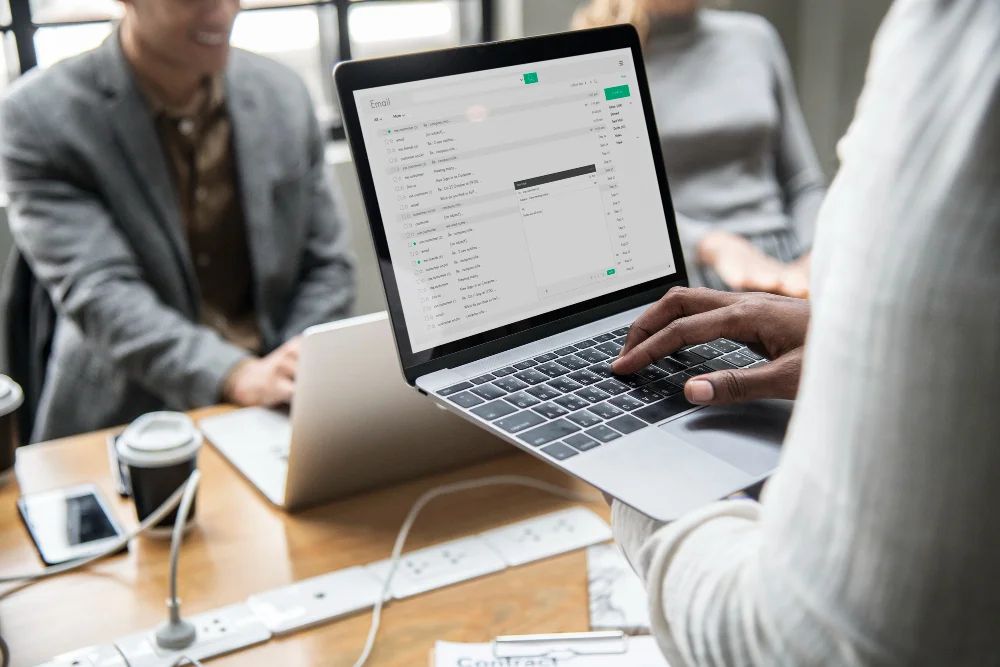
You open your inbox and there it is: an interview invitation. Your stomach does a small flip. Now comes the part nobody talks about enough: how you reply to that email matters almost as much as the interview itself. At SpeakAwesomely, we study how words shape professional outcomes, and interview email replies are one of the highest-stakes communication moments a job seeker faces. A polished reply signals preparation. A sloppy one signals the opposite, before you ever say a word in person.
If you have ever stared at a blank reply window wondering whether to sound enthusiastic or measured, formal or friendly, this guide gives you the exact words to use. We cover every situation: accepting, rescheduling, declining, virtual interviews, panel invitations, and the awkward in-between moments. You may also find it useful to read our guide on how to respond to ‘Can We Talk Later’, since managing professional conversations under pressure follows many of the same principles.
Why Your Interview Email Reply Is Already Part of the Interview
Recruiters form impressions fast. According to a 2023 report by the Society for Human Resource Management (SHRM), hiring managers assess candidate professionalism at every touchpoint in the hiring process, including written communication before the first interview. Your reply is not a formality. It is a preview of how you handle real workplace communication: clarity, timeliness, tone, and attention to detail.
Think about what a recruiter sees when fifty candidates reply to the same invitation. Most replies are functional but forgettable. A reply that is warm, clear, and error-free stands out immediately. That small advantage compounds over the course of a hiring process.
Quick Answer: How Should You Reply to an Interview Email?
Reply within 24 hours using a professional subject line, a brief thank-you, a clear confirmation of the date and time, and a polished sign-off. Keep it under 100 words. Match the recruiter’s level of formality. If you need to reschedule, offer two alternative time slots in the same message. Never leave the recruiter without a confirmed next step.
Quick Chooser: Which Reply Type Do You Need?
| Your Situation | Reply Type | Best For | Avoid If |
|---|---|---|---|
| The time works perfectly | Simple acceptance | All interview formats | You have not checked the time zone |
| You have a conflict at their suggested time | Polite reschedule with alternatives | When you genuinely want the role | You are using it to stall |
| You are no longer interested | Graceful decline | Keeping doors open for the future | You ghost instead of replying |
| It is a video or phone interview | Acceptance with logistics confirmation | Zoom, Teams, phone screens | You skip confirming the platform link |
| You need more information before confirming | Clarification request | Panel format, role details unclear | You ask questions already answered in their email |
If you are also preparing what to say once the interview starts, the Interview Answers Vault is a practical resource with ready-to-use answers for the most common and difficult interview questions, built so you walk in with real confidence rather than rehearsed guesses.
Step 1: Read the Invitation Fully Before You Reply
This sounds obvious, but it is the step most people rush. Before typing a single word, locate the following in their email:
- The interview format: in-person, phone screen, video call, or panel
- The proposed date and time, including time zone
- The location or platform: office address, Zoom link, or phone number to call
- Any documents requested: updated CV, portfolio, references, ID
- Who will be interviewing you: one person, a panel, or a hiring committee
Missing a detail buried at the end of the email, like a request to bring ID or complete a pre-interview form, can embarrass you on the day. Read it twice.
Step 2: Match Their Tone Without Losing Professionalism
Tone-matching is a genuine communication skill. Research published in the Journal of Computer-Mediated Communication found that people who mirror the linguistic style of their conversation partner are rated as more likeable and competent in professional contexts. In practical terms:
- If the recruiter writes formally: “Dear Mr. Okafor, we would like to invite you to interview…” then open with “Dear Ms. Clarke” and keep every sentence formal.
- If the recruiter is warmer: “Hi Jordan, we’d love to set up a quick chat!” then “Hi Sarah” and a slightly relaxed tone works well, as long as you stay professional.
What you never do: drop into text message style. No emojis, no abbreviations, no one-line replies with zero structure.
Word-for-Word Email Templates for Every Situation
Template 1: Accepting the Interview (Standard)
Subject: Interview Confirmation, [Your Full Name], [Job Title]
Dear [Recruiter’s Name],
Thank you for inviting me to interview for the [Job Title] role at [Company Name]. I am delighted to confirm my availability on [Day, Date] at [Time, Time Zone].
Please let me know if there is anything you would like me to prepare or bring along.
I look forward to speaking with you.
Best regards,
[Your Full Name]
[Phone Number]
Why it works: It is concise, confirms every key detail, invites the recruiter to clarify expectations, and ends with genuine forward-looking language rather than filler.
Template 2: Accepting a Video or Phone Interview
Subject: Interview Confirmation, [Your Full Name], [Job Title]
Dear [Recruiter’s Name],
Thank you for the invitation to interview for the [Job Title] position. I am happy to confirm my availability on [Day, Date] at [Time, Time Zone] via [Zoom / Microsoft Teams / phone call].
I have received the [meeting link / dial-in details] and will be ready at the scheduled time. Please do not hesitate to contact me if any details change.
Looking forward to our conversation.
Best regards,
[Your Full Name]
[Phone Number]
Template 3: Requesting a Reschedule
Subject: Interview Request, Reschedule, [Your Full Name], [Job Title]
Dear [Recruiter’s Name],
Thank you very much for the interview invitation for the [Job Title] role. I genuinely appreciate the opportunity and want to make sure I give this conversation the attention it deserves.
Unfortunately, I have a prior commitment at the suggested time. Would it be possible to reschedule? I am available on [Option 1: Day, Date, Time] or [Option 2: Day, Date, Time], and I am happy to work around your schedule if neither of those suits.
I apologise for any inconvenience and thank you for your understanding.
Best regards,
[Your Full Name]
[Phone Number]
Why it works: It leads with genuine interest, not just the problem. Offering two alternatives makes it easy for the recruiter to say yes immediately.
Template 4: Declining the Interview Gracefully
Subject: Interview Invitation, [Your Full Name], [Job Title]
Dear [Recruiter’s Name],
Thank you very much for considering me for the [Job Title] position at [Company Name]. After careful reflection, I have decided to withdraw from the process at this time.
I have a great deal of respect for [Company Name] and I hope our paths may cross again in the future. I wish you and the team all the best.
Kind regards,
[Your Full Name]
Why it works: It is kind, brief, and leaves no bitterness. Hiring managers move between companies. A gracious decline today can become a warm connection later.
Template 5: Requesting More Information Before Confirming
Subject: Interview Invitation, Clarification Request, [Your Full Name], [Job Title]
Dear [Recruiter’s Name],
Thank you for the interview invitation for the [Job Title] role. I am very interested and want to confirm attendance as soon as possible.
Before I do, could you let me know [the interview format / who will be present / the expected duration]? This will help me prepare effectively.
I look forward to your reply and to the opportunity to speak with the team.
Best regards,
[Your Full Name]
[Phone Number]
Template 6: Accepting a Panel Interview
Subject: Panel Interview Confirmation, [Your Full Name], [Job Title]
Dear [Recruiter’s Name],
Thank you for the invitation to the panel interview for the [Job Title] position. I am pleased to confirm my attendance on [Day, Date] at [Time] at [Location / via Platform].
If it would be helpful, I would appreciate knowing the names and roles of the panel members in advance so I can prepare accordingly. Please let me know if that is possible.
I look forward to meeting everyone.
Best regards,
[Your Full Name]
[Phone Number]
Most Likely Real-Life Situations and What to Do in Each
Situation 1: The Interview Is Tomorrow and You Just Saw the Email
Do not panic. Reply immediately, even if it is late in the evening. A short, professional reply sent at 11 PM is far better than silence. Keep it simple: confirm you received it, confirm your attendance, and apologise briefly for the delayed reply without over-explaining. Recruiters understand that people have jobs and lives. What they do not forgive is no reply at all.
Buys time and confirms: “Dear [Name], I apologise for the delayed reply. I am pleased to confirm my attendance tomorrow at [Time]. I will be fully prepared and look forward to speaking with you. Best regards, [Your Name].”
Situation 2: You Have Already Accepted a Different Interview at the Same Time
You do not need to explain why you need to reschedule. A simple conflict reference is enough. Offer alternatives immediately. Do not mention that the conflict is another interview: there is no benefit to disclosing that.
Situation 3: The Email Asks You to Complete a Task Before the Interview
Acknowledge the task in your reply. Moves things forward: “I note the request to complete [task name] in advance and will submit this by [date].” This signals that you read carefully and are already taking action.
Situation 4: You Are Not Sure Whether the Role Is Still Right for You
Accept the interview anyway if you are genuinely uncertain. You can decline after the conversation once you have more information. Declining before speaking often closes a door based on incomplete information. Your reply should be confident and interested, even if privately you are still weighing it up.
Situation 5: The Recruiter’s Email Has a Typo in Your Name or the Job Title
Do not correct them in your reply unless it creates genuine confusion. Let it go. Your reply should be addressed correctly to them, signed with your correct name, and otherwise focused on confirming the details. Correcting their typo reads as pedantic at this early stage.
Situation 6: You Are Applying From Abroad and There Is a Time Zone Difference
Always restate the time in both time zones in your reply. Clarifies: “I confirm my attendance on [Day, Date] at [Their Time, Their Time Zone] / [Your Time, Your Time Zone].” This prevents a costly misunderstanding and signals that you are detail-oriented.
Situation 7: The Interview Invitation Comes From a Generic HR Inbox, Not a Named Person
Open with “Dear Hiring Team” or “Dear [Company Name] Recruitment Team”. Do not leave it blank or use “To Whom It May Concern”, which reads as outdated and impersonal.
Situation 8: The Interview Is for a Role You Applied to Months Ago and Almost Forgot About
Do not reference the gap or apologise for it. Simply reply as you would for any other invitation. If you need a moment to recall the details of the role and reread the job description before replying, take it. Replying from a place of clarity is always better than replying from a place of assumption. A focused, informed reply will not reveal that you needed a moment to refresh your memory.
What Recruiters Actually Notice in Your Reply
Recruiters are not grading your email like an exam, but they are noticing patterns. According to a 2022 LinkedIn Talent Trends report, communication quality in early candidate interactions is among the top five factors that influence recruiter enthusiasm before a first interview. Specifically, recruiters notice:
- Response speed: Replying within a few hours signals eagerness. Replying after 48 hours raises a quiet question about reliability.
- Whether you confirmed all details correctly: If you got the date or time wrong in your reply, it signals that you skim rather than read.
- Tone calibration: A reply that is too stiff or too casual both create friction.
- Whether you added something useful: A brief, genuine line about the role or company shows active interest, not just availability.
What to Do Before You Hit Send
This is where most mistakes happen. Before sending any interview reply, run through this checklist:
- Did you spell the recruiter’s name correctly? Check the signature line in their email.
- Did you confirm the right date and time, including time zone? Copy it directly from their email to avoid transcription errors.
- Did you attach any requested documents? If they asked for an updated CV, it must be attached before you send.
- Is your subject line clear and professional? “Re: Interview Invitation” is fine. A blank subject line is not.
- Does your email signature include your phone number? Give them another way to reach you if needed.
- Did you read your reply out loud? This catches awkward phrasing and tone problems that reading silently misses.
If you want a tool that helps you draft and refine professional replies quickly, the SpeakAwesomely AI Response Generator can suggest phrasing adjustments in seconds, especially useful when you are drafting under time pressure.
Phrases and Replies to Avoid
Some replies actively damage the impression you are trying to make. Here are the most common mistakes and the emotional signal each one sends:
- “Sure, works for me.” Too casual. Signals you are not taking this seriously. The emotional mistake: indifference.
- “I’ll be there.” Missing gratitude and confirmation detail. The emotional mistake: presumptuousness without warmth.
- “Sorry for the late reply, I’ve been really busy.” Oversharing. Every professional is busy. The emotional mistake: it reads as poor time management framed as an excuse rather than a genuine apology.
- “I am very excited and cannot wait to demonstrate my skills and passion for this incredible opportunity.” Over-eager in a confirmation email. The emotional mistake: desperation signals. Save enthusiasm for the interview itself.
- “Is there parking?” as your only question. The emotional mistake: it signals you prioritised your own logistics over the recruiter’s time. Check their website first.
- A vague or missing subject line such as “Re: Re: Fwd: Interview.” The emotional mistake: carelessness. Write a clean subject line every time.
- A reply that restates your whole CV. The emotional mistake: misjudging the moment. The confirmation email is not a second application. Keep it to logistics and one genuine line of interest, maximum.
- “Just checking you got this!” sent one hour after your original reply. The emotional mistake: anxiety made visible. Give the recruiter at least 48 to 72 hours before following up.
How to Handle the Emotional Pressure of Replying
For many people, especially those early in their careers or returning after a gap, an interview invitation triggers a spike of anxiety. The pressure to sound perfect can lead to over-editing, stalling, or sending something stiff and unnatural. A few things that actually help:
- Draft first, send second. Write your reply in a notes app or document before pasting it into the email window. This removes the risk of sending a half-finished draft accidentally.
- Use a template as a starting point, not a finished product. The templates in this article are meant to be personalised, not copied verbatim.
- Shorter is almost always safer. Anxiety tends to produce longer emails with more qualifications and apologies. Cut anything you would not say in a professional face-to-face conversation.
- Read it from the recruiter’s point of view. Ask yourself: does this give them everything they need? Is there anything here that might create a bad impression? If both answers are satisfied, send it.
- Set a personal deadline. Tell yourself you will send the reply within the next 30 minutes. A fixed window stops the loop of endless re-reading and second-guessing.
The same communication intelligence that helps you navigate a professional email also applies in personal contexts. If you are ever supporting someone younger through a life transition, you may find our resource on words that help children settle into a new home a useful companion piece on how language shapes confidence at any age.
When You Should Wait Before Replying
There are two scenarios where a brief pause before replying is smarter than immediate action. First, if you genuinely need to check your calendar against a competing commitment, take fifteen minutes rather than confirming and then retracting. A wrong confirmation is worse than a slightly delayed one. Second, if the email contains an unexpected element, like a different role title than you applied for, or an interview format you were not prepared for, pause long enough to understand what you are agreeing to. Replying from a place of clarity is always better than replying from a place of assumption.
For more advice on handling delayed or uncertain professional replies, our article on best replies to ‘I Was Busy’ covers how to handle timing and accountability with professionalism.
FAQs
How quickly should I reply to an interview email?
Aim to reply within 24 hours. If you receive the invitation during business hours, replying within two to four hours signals strong interest. A reply sent within 48 hours is still acceptable. Anything beyond 48 hours without explanation raises a concern about responsiveness.
Should I use the recruiter’s first name or last name in my reply?
Follow their lead exactly. If they signed the email as “Sarah”, use “Dear Sarah”. If they signed as “Ms. Carter”, use “Dear Ms. Carter”. If no name is given, use “Dear Hiring Team” or “Dear [Company Name] Recruitment Team”.
What if I am no longer interested in the role?
Send a gracious decline as soon as you decide. Do not ghost. A polite decline takes two minutes to write and keeps the relationship intact. Many hiring managers return to past candidates when roles change or new positions open.
Do I need to include my CV in my reply?
Only if they explicitly asked you to send it again. Do not attach unsolicited documents. The reply is a logistics confirmation, not a second application.
What if I do not know the name of the person interviewing me?
Ask politely in your reply: “Could you let me know who I will be speaking with so I can prepare appropriately?” This is a professional and reasonable request that demonstrates preparation.
Can I ask about salary or benefits in my interview reply?
No. Save compensation discussions for the interview itself, and ideally until after an offer is on the table. Raising it in your confirmation email can read as premature and purely transactional.
What if the interview invitation is very vague or missing key details?
Reply with a polite clarification request. Thank them, express your interest, and ask specifically for the missing information such as the platform, duration, or format. Do not confirm an interview you do not fully understand.
What is a good subject line for replying to an interview invitation?
Use something clear and easy to search: “Interview Confirmation, [Your Full Name], [Job Title]” or simply reply to their original thread so the original subject line remains. Avoid vague subjects like “Re: Your Email” or leaving the subject line blank.
Should I follow up if I confirmed but never received a reply?
Yes. If you sent your confirmation and have not received an acknowledgement or any further details within 48 to 72 hours, a brief follow-up is appropriate. Keep it short: “I wanted to check that my confirmation for the [Job Title] interview on [Date] was received. Please let me know if you need anything further from me.”
Is it unprofessional to send the reply from my phone?
The device does not matter. What matters is the quality of what you send. If you reply from your phone, turn off autocorrect and proofread carefully. A typo introduced by autocorrect is just as damaging whether it came from a laptop or a phone.
Conclusion
Replying to an interview email is a small action with a real professional weight. It is your first written impression, your first demonstration of how you communicate under normal conditions, and your first chance to show the recruiter that you are the kind of person who pays attention and respects other people’s time.
A strong reply does not require special talent. It requires reading carefully, confirming clearly, matching tone, and sending promptly. The templates and principles in this guide give you everything you need to do exactly that, for every type of interview invitation you will ever receive.
Related Articles

How to Respond to Who Asked Without Sounding Rude
Find calm, confident replies to who asked without sounding rude. Organized by relationship, tone, and situation, with real examples you can copy or adapt.
Read more →
How to Reply When Someone Says “Make Me” — The Best Comebacks for Every Situation
Learn smart replies when someone says 'make me' with situation-specific responses for flirting, boundaries, work conflicts, and family dynamics.
Read more →
Best Replies to ‘I Was Busy’: 60+ Smart Responses for Every Situation
Get smart replies to 'I was busy' for dating, work, friends, and family. 40+ responses that match their tone and protect your dignity.
Read more →