SmartLogger Data Integration at Utility Solar Plants
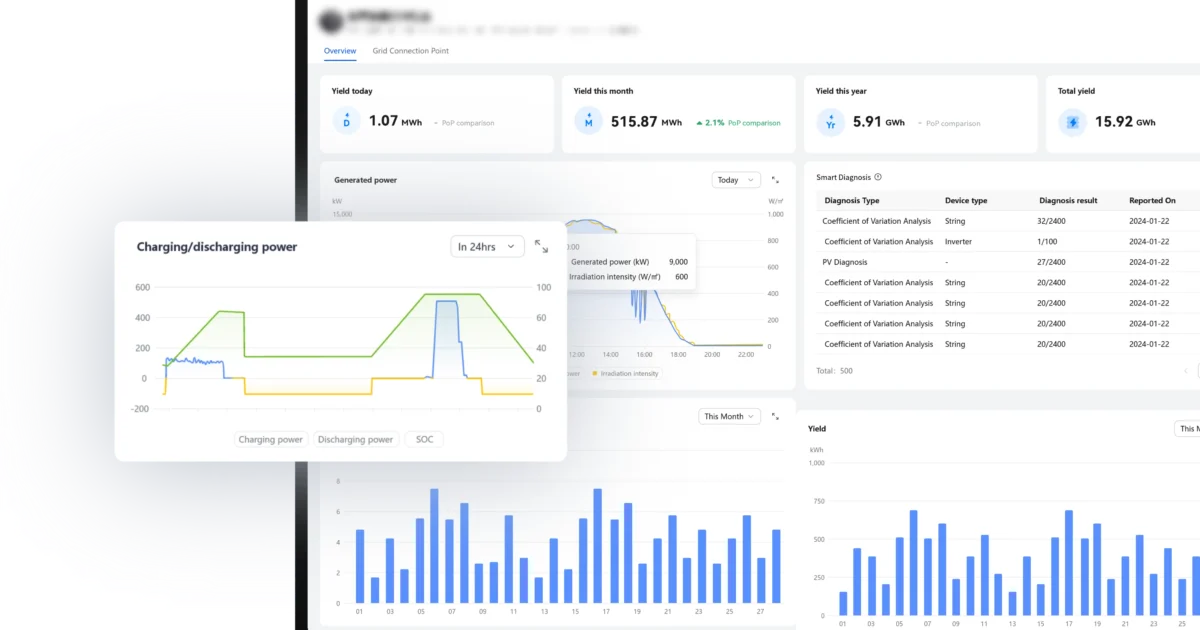
For a utility plant requiring centralized device data, equipment decisions must follow the required service and the conditions of the actual site. SmartLogger is a communication and control gateway used in photovoltaic plants to connect field devices with monitoring and supervisory systems. The Huawei SmartLogger3000A documentation describes RS485, Ethernet and selected wireless options, along with plant-level active power management functions. In this context, SmartLogger brings together specific components and controls rather than a single isolated device.

Utility-scale operators depend on a consistent equipment hierarchy and trusted communications between field devices and control systems. Equipment ratings, control policies and the responsibilities of the operating team should therefore be aligned before commissioning. A design assumption should be documented when it cannot yet be confirmed by measurements.
Communications gateway design
SmartLogger3000A specifications list three RS485 COM interfaces plus Ethernet WAN and LAN ports. Some variants support cellular communication or MBUS; the availability of each interface must be checked against the selected model.
Field wiring should respect cable length, shielding, terminations and electromagnetic interference. Stable data capture depends on both physical communications quality and correct software settings for every connected device.
Protocols and data integration
The product documentation lists protocols including Modbus RTU, Modbus TCP and IEC 60870 variants for specified interfaces. Third-party integration should use the supported register map and test the complete set of required data points.
Data transmission security, account permissions and network segmentation should form part of deployment. A control gateway with remote accessibility deserves stricter change procedures than a passive display terminal.
Plant-level control functions
A zero-export or export-limit scheme uses a meter at the appropriate point of connection and commands inverter output accordingly. Incorrect meter direction or communications delay can make the controller act on the wrong power balance.
Grid requirements may include active power limits, reactive power management and protective coordination. The specific functional scope must be validated for the logger model, inverter firmware and local grid code.
Commissioning and operation
Installation should include verification of power supply, earthing, device addresses, RS485 polarity and network routes. Commissioning records should list which equipment is connected to each interface and the expected data refresh interval.
Changes to inverter capacity, firmware or a site export limit require configuration review and a controlled retest. A reliable SmartLogger installation is maintained as part of the plant protection and data architecture.
An engineering review should trace the complete route from the source of energy or heat to the point where it is consumed or rejected. Each interface needs a named owner, an acceptance criterion and a safe state for loss of communication.
These considerations show why SmartLogger should be specified by its architecture, operating limits and interfaces. SmartLogger brings field measurements and plant commands into a manageable interface. Its technical value depends on correctly configured device connections, reliable metering and tested control pathways. The final selection still depends on applicable standards, actual site conditions and model-specific documentation.
Related Articles

5 Phrases That De-Escalate Tension in Any Household
Every home has its moments. One minute, everyone is laughing over breakfast, and the next, the atmosphere feels thick enough to cut with a knife.…
Read more →
Other Best Ways to Say Happy New Year
Have you ever typed “Happy New Year!” into a message, paused, and thought: This feels… flat? I remember sitting on my phone just before midnight…
Read more →
Best Ways to Say Hi in Japanese: A Complete Guide
Have you ever walked into a room in Japan and wondered, am I saying hello the right way? I still remember my first day at…
Read more →