Is There a Seahorse Emoji? (Explained with Expert Insights)
No seahorse emoji exists in Unicode. Find out why thousands remember it, what the Mandela Effect has to do with it, and what to use instead.
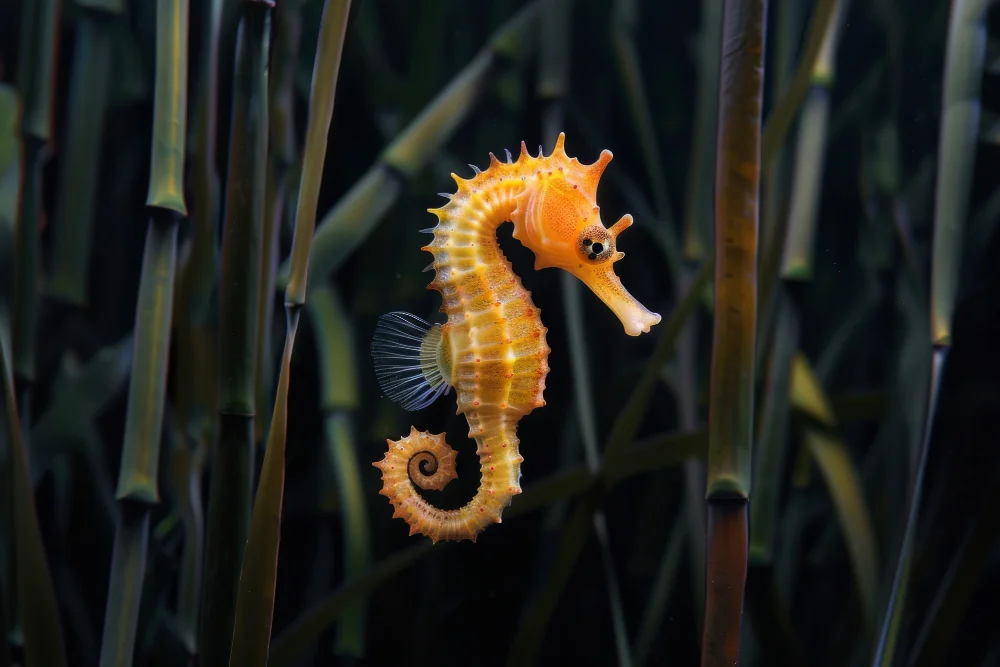
You scrolled through every ocean creature in your emoji keyboard. Fish, whale, dolphin, crab, octopus, shark, coral, even a lobster. But no seahorse. You were sure it existed. You may have even used it before. And yet it is simply not there.
At SpeakAwesomely, where we decode the language and symbols people use every day, this question comes up more than you might expect. The seahorse emoji is one of the most searched-for emojis that has never actually existed, and the reason so many people are convinced they have seen it says something genuinely fascinating about memory, digital culture, and how our brains process the visual shorthand we rely on constantly.
This article gives you the clear answer, explains the psychology behind the false memory, covers what to use instead, and walks through how a seahorse emoji could eventually become real.
Quick Answer: Does a Seahorse Emoji Exist?
No seahorse emoji exists in the official Unicode emoji set. According to the Unicode Consortium’s full emoji list, no seahorse has ever been approved or added to the standard set available across Apple, Android, WhatsApp, and other platforms. Any memory of seeing one is most likely a case of the Mandela Effect, where a false memory feels completely real because it fits logically with what we expect to exist. The closest alternatives are the tropical fish emoji, the spiral shell, or a custom sticker from a third-party keyboard.
What Is the Seahorse Emoji and Why Do People Think It Exists?
The confusion is real, widespread, and well-documented across online communities. Threads on Reddit, Quora, and X (formerly Twitter) regularly feature people insisting they have seen a yellow or pink, left-facing seahorse emoji somewhere on their keyboard. The feeling is vivid. The memory is confident. And yet the emoji was never there.
Here is what actually drives that false memory:
- Pattern completion: The emoji ocean creature set includes the fish, whale, dolphin, shark, crab, lobster, shrimp, octopus, coral, and blowfish. A seahorse fits so perfectly into that set that the brain assumes it must already be there. This is called pattern completion, a well-documented feature of human memory where the mind fills in gaps to match an expected sequence.
- Third-party stickers and GIFs: Platforms like LINE, Telegram, Facebook Messenger, and several third-party emoji keyboards have offered seahorse sticker packs, GIF sets, or custom icon libraries. Over time, people stop distinguishing between an official Unicode emoji and a third-party sticker. The visual memory merges into one.
- Autocomplete and suggestion tools: Some emoji search functions on phones will surface seahorse-adjacent images when you type the word. Seeing a result can feel like confirmation that it exists as an official emoji, when it does not.
- Similar-looking emojis: The spiral shell, the dragon, and even the curled tail of certain fish emoji designs can visually blur into a seahorse memory, especially on smaller screens.
In a foundational study published in the Journal of Memory and Language, Roediger and McDermott (1995) demonstrated that false memories form most reliably around items that belong to a recognizable category but are absent from a list. Emojis are essentially visual lists grouped by category, which makes them a near-perfect environment for this type of memory error.
What Is the Mandela Effect and How Does It Apply to Emojis?
The Mandela Effect is the name given to situations where large groups of people share the same false memory. The term emerged after many people incorrectly recalled that Nelson Mandela died in prison in the 1980s, when he actually lived until 2013. The same effect shows up regularly in emoji culture.
Dr. Elizabeth Loftus, cognitive psychologist at the University of California, Irvine and one of the world’s leading researchers on memory distortion, has demonstrated in peer-reviewed studies across several decades that memory is not a recording. It is a reconstruction. Every time you recall something, your brain rebuilds it from fragments, filling gaps with logic, expectation, and cultural context.
Applied to emojis, this means:
- If a symbol should logically exist in a set, your brain is likely to remember it as existing.
- If you have seen a seahorse image in any digital context, including a sticker, a GIF, or a game icon, that visual gets stored without a reliable label for where it came from.
- When you later try to recall whether the emoji exists, your brain finds the visual memory and interprets it as confirmation.
The seahorse is not alone in this. Other commonly misremembered emojis that have never existed in Unicode include a wizard hat, a standalone pirate flag (not the skull and crossbones, but an actual Jolly Roger), and a money bag with wings (frequently confused with the existing money-with-wings emoji, 💸).
How Does the Official Emoji Approval Process Work?
Emojis are not invented by Apple, Samsung, or WhatsApp. They are standardized by the Unicode Consortium, a non-profit organization that manages text encoding standards across all digital systems worldwide. Every emoji that appears on your phone has been formally reviewed and approved by this body.
The process works in four main stages:
- Proposal submission: Anyone can submit a proposal for a new emoji. The submission must include evidence of cultural relevance, expected frequency of use, clear visual distinction from existing emojis, and supporting data such as search volume or social media mentions.
- Subcommittee review: The Emoji Subcommittee reviews submissions against specific criteria. They assess whether the proposed emoji fills a genuine communicative gap, avoids being too specific or redundant, and has broad cross-cultural meaning.
- Full consortium vote: Proposals that pass the subcommittee are put to a broader vote among Unicode member organizations, which include Apple, Google, Microsoft, Meta, and Adobe.
- Platform design: Once approved, each platform designs its own version of the emoji within the Unicode standard. This is why the same emoji looks slightly different on an iPhone versus a Samsung device.
New emoji sets are typically released once a year. As of Emoji 16.0, the seahorse has not appeared in any approved set, any candidate list, or any publicly available Unicode pipeline document.
If you want to verify exactly which emojis are currently official, the Unicode full emoji list is publicly accessible and updated with each new version release.
Which Real Emojis Can You Use Instead of a Seahorse?
If you need to represent a seahorse in a message, several creative workarounds exist using official emojis that are already available everywhere:
| Goal | Best Emoji Substitute | Why It Works |
|---|---|---|
| Reference a seahorse directly | 🐠🌀 (tropical fish + spiral shell) | Visually suggests the curled, ornate shape of a seahorse |
| Ocean scene with a marine atmosphere | 🌊🐚🐟 | Creates a full marine setting without needing the exact animal |
| Symbolize rarity or uniqueness | ✨🦄 | Seahorses are often used metaphorically to mean rare or unusual |
| Marine conservation or ocean life | 🐋🪸🌿 | Communicates care for ocean ecosystems broadly |
| Quirky or unexpected personality | 🦑🐡 | Unusual sea creatures carry a similar offbeat energy |
If you want to go deeper into what specific emojis actually mean in context, the Emoji Decoder Vault at SpeakAwesomely breaks down the layered meanings behind hundreds of emojis, including how the same emoji reads differently depending on who sends it and in what context.
You can also try the SpeakAwesomely Emoji Finder tool to search for the closest match to what you are looking for, even when the exact emoji you want does not yet exist.
Why the Seahorse Emoji Has Strong Cultural and Symbolic Value
The case for creating an official seahorse emoji is not trivial. Seahorses carry a distinctive set of cultural meanings that no existing emoji currently represents:
- Fatherhood and role reversal: Male seahorses carry and give birth to young, making the seahorse a meaningful symbol for non-traditional parenting roles and shared caregiving responsibility.
- Patience and persistence: Seahorses move slowly but with extraordinary control. Across several cultural traditions, they symbolize calm determination against strong currents.
- Marine conservation: Seahorses are a threatened species in many parts of the world, according to the IUCN Red List. An emoji featuring one could raise casual awareness of ocean biodiversity in everyday conversation.
- Mythology and symbolism: In Greek mythology, seahorses (hippocampi) carried Poseidon’s chariot. They appear across coastal cultures as symbols of strength, good luck, and safe travel.
- Visual distinctiveness: The seahorse has one of the most recognizable and visually unique silhouettes in the animal kingdom. It looks like nothing else in the current emoji set.
Google Trends data shows consistent, recurring spikes in the search term “seahorse emoji” over the past five years, which is one of the data points the Unicode Consortium weighs when evaluating demand for new proposals.
Could a Seahorse Emoji Be Approved in the Future?
Yes, and there is genuine precedent for it. The Unicode process is open to public proposals, and several animals that once seemed unlikely have been approved after community advocacy. The hedgehog (🦔), the flamingo (🦩), the otter (🦦), and the sloth (🦥) were all added in relatively recent emoji versions after proposals demonstrated genuine public demand.
For a seahorse proposal to succeed, it would need:
- A formal submission to the Unicode Consortium meeting all documentation requirements
- Evidence of high search volume and social media usage
- A clear argument that it fills a communicative gap not covered by existing emojis
- Cross-cultural resonance beyond one specific region or language group
If you genuinely want to advocate for a seahorse emoji, the Unicode Emoji Submission Guidelines are publicly available. Community petitions shared widely on social media have historically attracted attention from the subcommittee.
Real-Life Scenarios Where People Most Often Search for the Seahorse Emoji
Understanding when people reach for this non-existent emoji is useful context for finding better alternatives in the moment:
- Ocean-themed birthday messages: Someone composing a birthday text for a friend who loves the sea reaches for every available marine emoji and notices the gap immediately.
- Marine biology conversations: Students or nature enthusiasts discussing ocean life in a group chat want precise, accurate representation of the animal they are describing.
- Pregnancy announcements with a twist: Given the male seahorse’s role as the one who carries young, some people specifically want the seahorse emoji for gender-role-subverting pregnancy posts.
- Dating app bios: People who describe themselves as rare, patient, or quietly unusual sometimes reach for the seahorse as a personality shorthand.
- Environmental awareness posts: Social media advocates for ocean conservation feel the absence keenly when trying to represent the full range of marine biodiversity.
In each of these situations, the emoji combinations in the substitution table above can carry the meaning you need until an official version exists.
If you are interested in how specific words and phrases carry emotional weight in ways we do not always notice, the SpeakAwesomely guide on how everyday words help children settle into a new home is a powerful read about the emotional precision behind language choices.
FAQs About the Seahorse Emoji
Does the seahorse emoji exist on iPhone or Android?
No. There is no seahorse emoji on iPhone, Android, WhatsApp, or any other major platform. Emojis are standardized by the Unicode Consortium, and the seahorse has never been approved. Any seahorse image you see in a messaging app is a third-party sticker or GIF, not an official Unicode emoji.
Why do so many people think the seahorse emoji exists?
This is a classic case of the Mandela Effect. The seahorse fits logically into the existing set of ocean creature emojis, so the brain fills in the gap and creates a false memory of having seen it. Exposure to seahorse stickers, GIFs, or third-party keyboard icons reinforces that false impression over time, as documented in memory research by Dr. Elizabeth Loftus at UC Irvine.
What is the closest emoji to a seahorse?
The spiral shell emoji (🐚) and the tropical fish emoji (🐠) are the closest visually. For symbolic meaning, the unicorn (🦄) captures the sense of rarity, and the otter (🦦) carries a similar playful, water-based energy. There is no single perfect substitute currently available.
Is there a seahorse emoji on any platform at all?
Not as an official Unicode emoji. Platforms like LINE, Telegram, and some niche third-party emoji keyboards have seahorse sticker packs, but these are not part of the universal standard and will not display correctly across all devices.
Has a seahorse emoji ever been submitted to Unicode?
There is no public record of a seahorse emoji proposal that gained traction through the official Unicode process. The Unicode Consortium publishes its review history, and no seahorse appears in any approved, pending, or historically rejected pipeline as of 2025.
How do I propose a new emoji to Unicode?
You submit a formal proposal through the Unicode Emoji Submission page. Proposals must include evidence of cultural relevance, expected frequency of use, visual distinctiveness, and supporting data like search trends or social media mentions. The process is open to the public.
What other emojis do people falsely remember existing?
Common examples include a wizard hat emoji, a pirate flag emoji, a money bag with wings, and a flame inside a glass. In each case, the image feels like it should exist within an established category, which is exactly the psychological condition that produces false emoji memories, as described in Roediger and McDermott’s 1995 research on false recall.
Could the seahorse emoji be added in a future Unicode release?
Yes. Unicode releases new emoji sets approximately once a year. Animals with strong cultural symbolism, clear visual distinctiveness, and documented public demand have a reasonable chance of being approved. The flamingo, otter, and sloth were all added through this route in recent years.
What does a seahorse symbolize in digital communication?
When people reach for the seahorse concept in messages, they typically want to express rarity, uniqueness, patience, or a gentle kind of strength. It is also used to symbolize non-traditional gender roles, given that male seahorses are the ones who carry and give birth to young.
Is the seahorse emoji the same as the hippocampus emoji?
They refer to the same animal. The word hippocampus comes from the Greek words for horse (hippos) and sea monster (kampos), used in ancient mythology to describe the creature that drew Poseidon’s chariot. Neither a seahorse emoji nor a hippocampus emoji currently exists in the Unicode standard.
What This Tells Us About Digital Language and Memory
The seahorse emoji question is not just a fun curiosity. It reveals something important about how deeply emojis have been woven into the way we think and communicate. When an expected symbol is absent, the brain does not simply register a gap. It manufactures a memory of the missing symbol to resolve the cognitive dissonance.
This matters for digital communication more broadly. The emojis we reach for and the ones we wish existed reveal what we are actually trying to say, and where our shared symbolic vocabulary still has real holes.
If navigating ambiguous messages or unclear signals is something you deal with often, whether in texts, dating apps, or everyday conversations, the SpeakAwesomely guides on how to reply when someone says Make Me and the best replies to I was busy are exactly the kind of practical, situational breakdowns that make unclear social moments easier to navigate.
Until the day a seahorse emoji finally earns its place in the Unicode standard, creative substitution and a clearer understanding of your own memory will have to do. And honestly, that is a pretty good place to start.
Read Also: What Does the Melting Face Emoji Mean?
Related Articles

What Emoji to Use for Thank You: A Complete Guide
Not sure which emoji fits your thank-you? Find the right pick by relationship, tone, and platform. From colleagues to crushes, here is exactly what to…
Read more →
What to Use Instead of the Thumbs Up Emoji
Have you ever sent a simple 👍 in a chat and worried that it might have been taken the wrong way? You’re not alone. While…
Read more →
What Does the Nerd Face Emoji Mean and How to Respond
What does 🤓 really mean in a text? Decode every context behind the nerd face emoji, plus 30+ ready replies for friends, crushes, coworkers, and…
Read more →